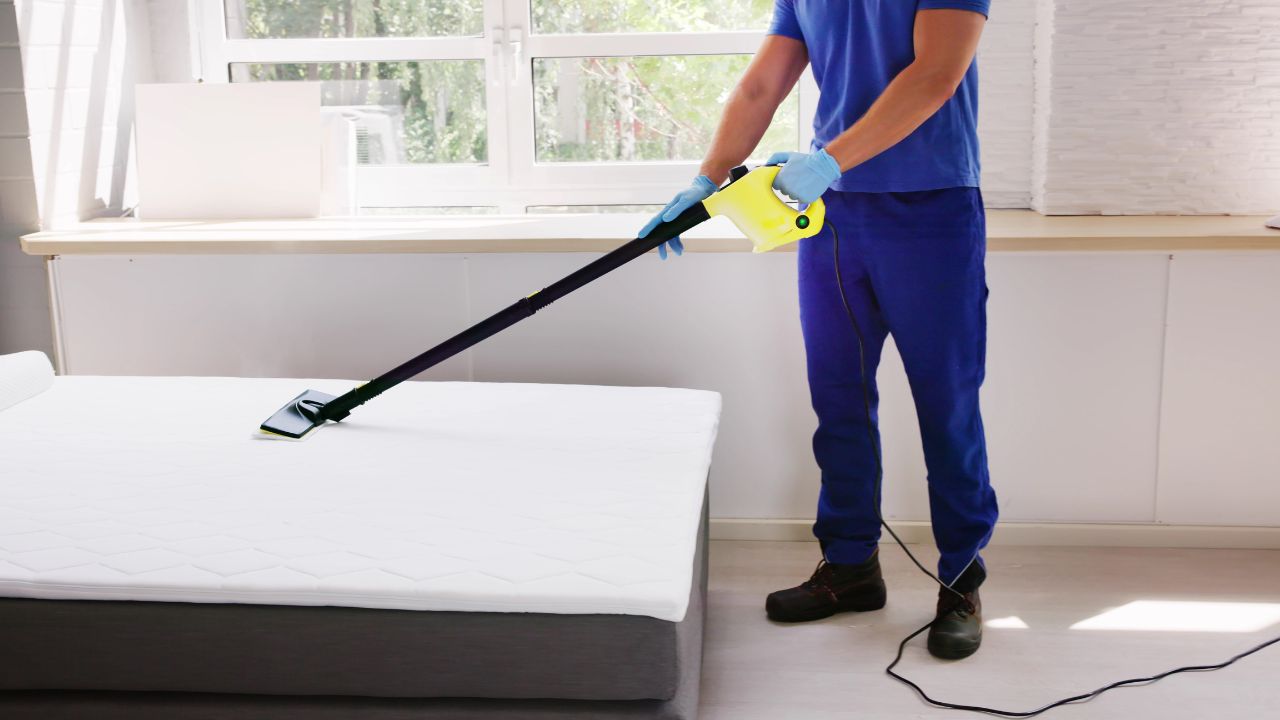
Refresh your bedroom for fall with these 6 simple steps to clean a fabric headboard — quick, effective, and renter-friendly.
However, upholstery can be a little more high maintenance than other materials. Without proper care, fabric headboards can quickly look worn, dirty, and old.
So it’s a good idea to learn how to keep your bedroom a clean, calm place and figure out a deep cleaning routine for your fabric headboard.
As an Amazon Associate, I earn from qualifying purchases. The links below may be affiliate links. Please read my disclosure policy for more information.
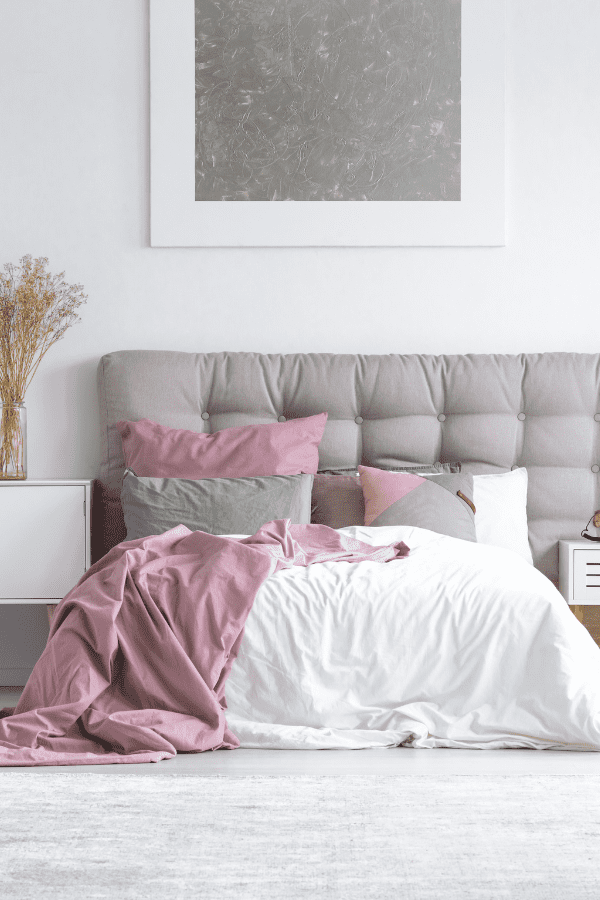
You don’t need to do it very often, but deep cleaning it every few months will keep the colors vibrant and the aesthetic clean and comfy. Keep reading to learn how to clean your fabric headboard deep.
The method you choose depends on the fabric headboard. Check the cleaning code on the headboard’s tag to know what liquids and chemicals the material can withstand.
Most headboards can be cleaned with soap and water. Make sure not to saturate the headboard, and ensure all soap residue has been removed.
Alternatively, you can also use baking soda to draw out oils and scents.
Why do I need to clean my fabric headboard?
Your headboard comes into contact with your skin and scalp every day. As a result, you head against it, transferring your dead skin cells, hair, and dirt.
No matter how clean you are, this is just inevitable. Never mind food spills and general dust.
Aside from hygiene purposes, old and worn headboards can begin to look tired, and the colors may fade.
You may only realize how different the headboard looks once you deep-clean it.
How often do I need to clean my upholstered bed?
Ultimately, it would be best to clean it once you notice dirt and grime. Washing it too regularly may wear away at the fabric unnecessarily.
However, you can vacuum clean the headboard as often as possible to get rid of dust and hair. Keeping on top of the dirt is more manageable than deep cleaning.
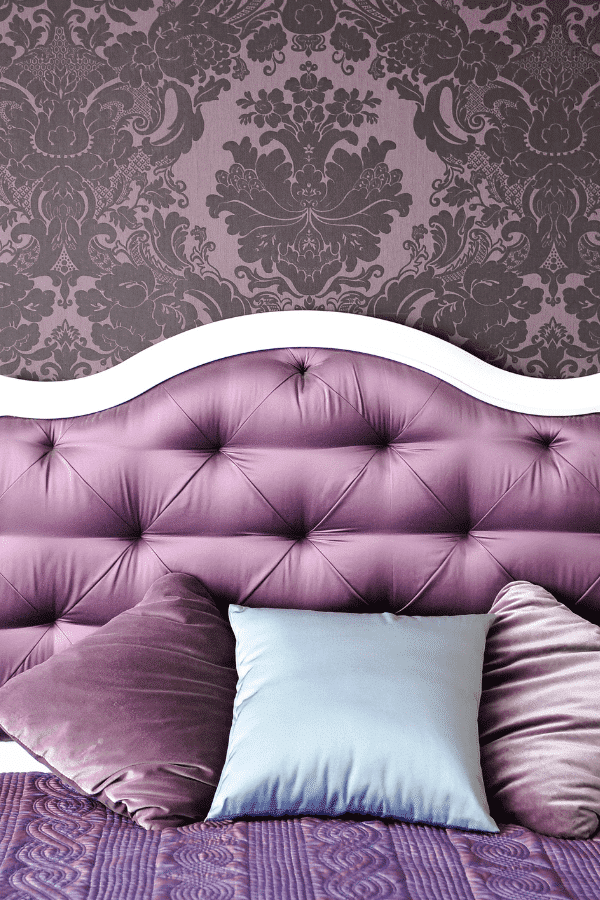
What you need to know before cleaning your bed frame
Every frame will come with cleaning codes to give the user information on how to care for the frame without damaging it.
These codes may look convoluted and unhelpful. But once you learn what they mean, they can be pretty handy in showing you how to clean and mistakes to avoid.
The codes are:
W: The W stands for water and indicates that your bed frame can be cleaned with water-based cleaners. If you have this code, it’s good news. As most cleaners are water-based, and it’s the easiest method.
S: This code indicates that your bed frame must be cleaned with a water-free solvent or should be professionally dry cleaned. Make sure to read up on your solvents before using them, as they can be flammable and harmful to inhale.
W/S: This code means that the fabric is adaptable and can be cleaned with both water-based cleaners and can be dry cleaned. To be safe, spot-test a section before committing to a method.
X: The X means you cannot use water-based cleaners or solvents. The fabric can only withstand vacuuming or brushing.
If you’re frantically checking for the code on your frame and cannot find it, don’t worry.
Simply try to figure out what material the frame is made of, look up the cleaning guidelines online, or get in touch with the manufacturer.
How to clean a fabric headboard with soap and water.
Why not keep things simple? Using just a few items you will already have in your home, you can achieve great results. It shouldn’t even take too long.
However, it’s a good idea to clean it in the morning, as far away from bedtime as possible. This will allow the frame maximum time to dry before you need to use it again.
Leaning against a cold, wet fabric frame is not a peaceful way to head off to sleep for anyone.
Equipment and gear you will need to clean your fabric fame.
- Vacuum with upholstery or brush attachment.
- Standard dish soap.
- Warm water.
- Clean sponges x 3.
- A fan (if necessary).
Follow these steps to deep clean the fabric headboard with soap and water:
- Vacuum
After checking the cleaning code and figuring out your fabric’s preferred cleaning method, let’s get to work.
First, remove as much excess dirt and grime as with a vacuum. Using the brush attachment, gently vacuum the upholstery.
The more dirt you remove while the fabric is dry, the easier it will be.
- Spot clean.
You’ll first want to tackle the more stubborn, stained parts of the headboard. If your headboard has the W/S code, combine one part dish soap with four parts warm water.
Grab a clean sponge, and dampen it in the cleaning solution. Wring it out, as you don’t want to soak the headboard. Blot the stain repeatedly until it disappears.
Then, grab another clean sponge or use the non-soapy end of the sponge and only dip it in clean water. Then, dab the stained area to rinse out the suds and the dirt.
- General cleaning.
Grab a sponge, and dampen it with the cleaning solution. Run the sponge along the entire headboard, applying a medium amount of pressure.
Work from the top of the headboard to the bottom. Wipe the entire headboard.
- Rinse.
Rinse the sponge under warm water or grab a fresh one, and go over the entire headboard again. Again, you’re trying to remove any residual soap and grime lingering.
- Air dry.
Leave the headboard to fully air dry before using it again. If you’re in a rush, point a fan at the fabric to speed up the process. However, do not use any heat to dry it.
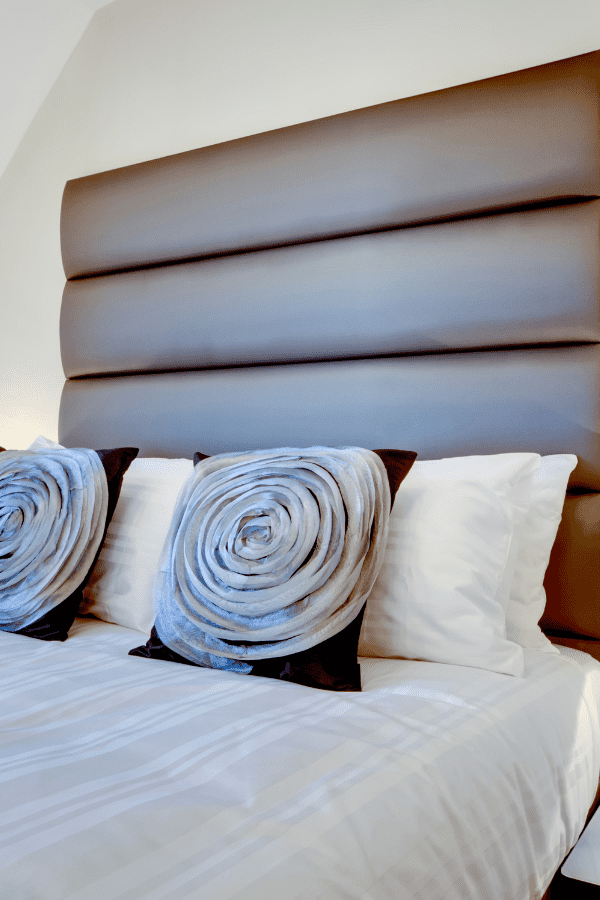
How to remove oil from a headboard.
Oil is a tricky substance than often doesn’t budge with standard cleaning methods.
If you’re removing some scalp oil, massage oil, or food grease on the headboard, follow these steps:
- Sprinkle baking soda over the area and leave to soak for 5-24 hours. Baking soda gets everywhere, so make sure to remove any bedding from the area first and lay down some towels to catch the excess powder.
- Once the baking soda has had time to soak in, vacuum up the remaining powder. Hopefully, the baking soda will have absorbed some of the greasy liquid.
- Mix together some dish soap and water, and apply some of the solution to the fabric using a cloth or sponge.
- Grab a clean cloth and wet it, and wipe down the entire headboard.
- Leave the headboard to dry.
How to maintain upholstered headboards.
To avoid regular deep cleaning, you can do a few steps to maintain an upholstered headboard.
Simply add this routine to the weekly cleaning of your home, and it’ll keep your headboard fresher for longer.
- Vacuum regularly. If you’re vacuuming the floor, quickly attach the fabric head and vacuum your headboard too. Vacuuming will suck up any lingering dust and loose dirt before it embeds itself deeper in the fabric.
- Use a scented fabric spray to keep the headboard spelling like fresh laundry.
- Once per month, apply some baking soda to the entire headboard. Follow the method listed above for the removal of oil, as the baking soda will draw out oils and bad smells trapped inside the fabric.

To Summarize.
Cleaning a fabric headboard is a pretty simple process. It may feel more daunting because it’s a process you might not have done before.
It’s always best to check the cleaning code provided on the headboard tag, as the headboard can be made of various fabrics and as such, will need to be treated differently.
Most headboards can be cleaned with some soap and water. You can also use baking soda to draw out oils and scents.
Try to make vacuuming the headboard a part of your weekly cleaning routine, as this will prevent the headboard from getting truly gross.